
What Should You Work On First?

--How Great Golfers Prioritize Improvement--
It's the age-old issue: you finish a round, you just shot a million, and you don't really have any clear answers as to what went wrong, or what to work on next. You know you should probably hit some balls--those two OB indicate that. You firmly believe you should practice more putting--somehow missing that 3-footer was just as bad a stroke as you've ever made. Your short game was a wreck (anyone ever seen somebody chunk AND skull a wedge at the same time?). You got tired around hole 12 because you didn't eat enough or drink enough water. You don't hit it as far as you should, and that makes the game way harder. And yet, in spite of all of that, if you just hadn't doubled #7 or #17, you still would have posted a score that might have been respectable.
Sheesh.
The million-dollar question remains: "What should I-- with my limited resource being time-- work on tomorrow?"
The answer is what we at Space City Golf Lab call your primary limiter.
First thing I want you to know: not all negatives or faults are created equal. You see it all the time at the tour level: the guy who drives it crooked, but far, wins frequently. The worst 3-foot putter on tour still makes most of his cuts, or oppositely, the guy who is the best 3-foot putter on tour is grinding to keep his job and his card. (For example: Tom Kim is one of the absolute worst putters on tour this year from 3-feet ranking 152 of 157 yet currently is about 30th on the FedEx cup rankings after just winning the Scottish Open while Joel Dahmen is currently 500 for 500 from 3-feet and is going to lose his job unless he gets a pretty strong turn-around to finish the year. (July 2026))
Golf improvement isn't about fixing everything. It's about figuring out what moves the needle the most. Then focusing our limited resources of attention and time on those couple things with explicit vigor. Re-enter the primary limiter.
The primary limiter is the one thing that, if improved, would have the greatest impact on your overall golf game. It isn't necessarily the thing you are the worst at, nor is it the thing that you feel the worst about, it's simply the thing that would have the biggest impact. It might be that you can't control the club through the hitting zone because your hips are weak, it might be that your body just isn't strong enough to make the moves you want to make. It also could be you really are just one drill away from unlocking "better forever"--I've seen that too.
This is why we always start with an assessment, and we always start with what the body can or can't do. We believe the body and swing are inseperable, and if you want to change anything, you better learn what the body can or can't do. If the body can't produce a movement consistently, the swing will show it.

We assess swing.
We assess mobility.
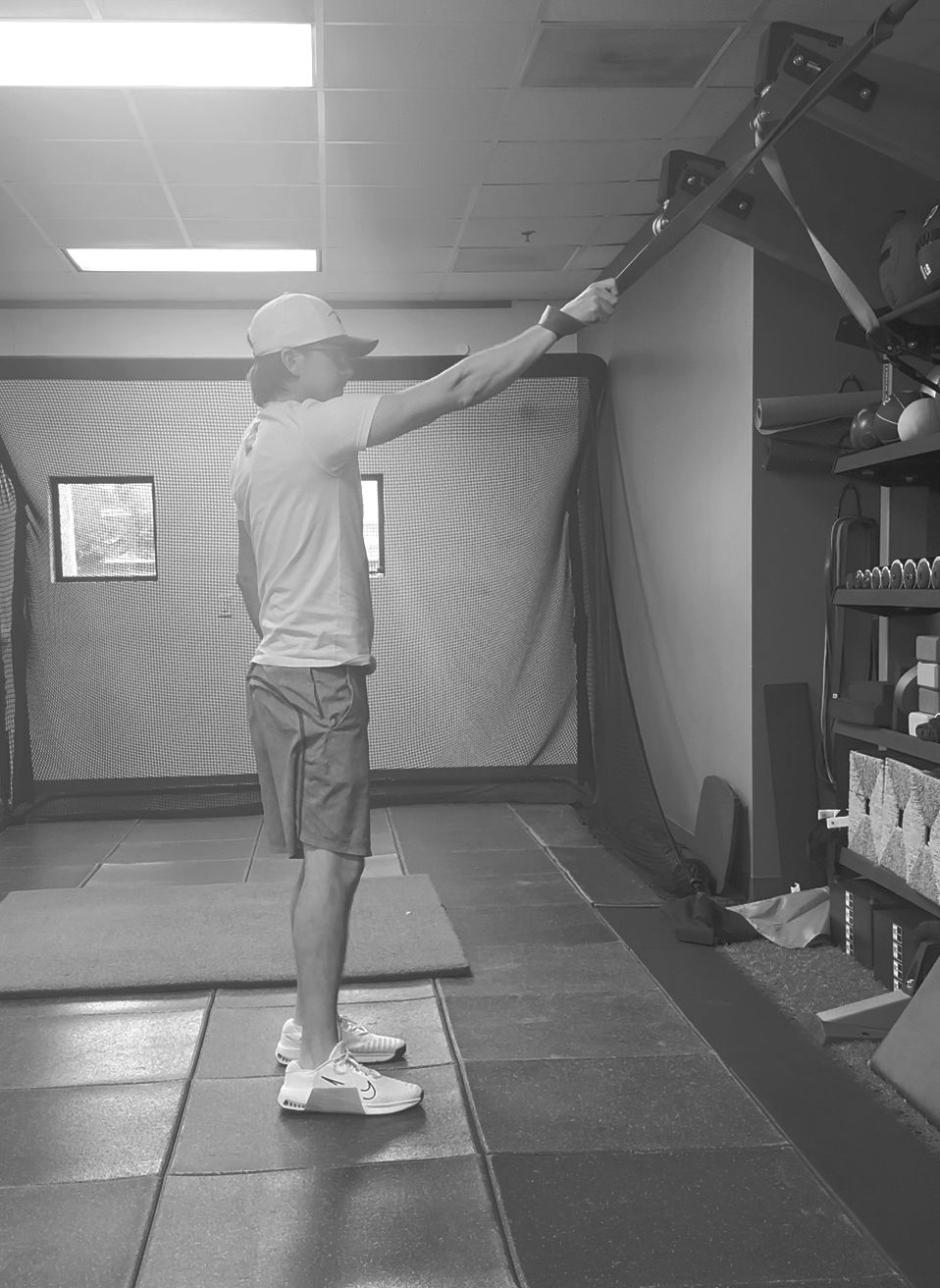
We assess movement capacity.
We assess power.
We assess strength.
Then we diagnose where a golfer is at. Or rather, why is this specific golfer not improving?
Sometimes the answer is physical: if the body needs work, start there. Sometimes the body is great, and we then check other things like habits. If a golfer sleeps five hours a night, eats ding-dongs and ho-hos with frequency, practices infrequently, and never hydrates, we'll start there. If all those boxes are checked, go get after swing instruction. If that's pretty solid, it might just be a practice plan. We don't know till we get under the hood and deep dive what's working and what's not.
We'll see a bunch of different golfers in a day:
-Perhaps one can't rotate, so everything suffers, along with having pain from the lower back-- mobility first.
-Another moves beautifully, but swings slow: strength and power are the primary limiter, so we spend more time lifting and developing speed.
-A third is strong, fast, and mobile, and hits it OB four times a round. They get more lesson time working on club path and face control.
-The last session of the day plays in college and has all the tools, but just doesn't know how to practice, so we write a practice plan that keeps him working consistently on the right things day after day and he avoids developing holes in his game.
All unique individuals, all pretty good players, but all different roadmaps and paths. Player three wouldn't be using their time most effiently working on what player one is working on, and player two is getting everything they can out of their swing already, so practicing another three hours, like player four, doesn't move the needle nearly as much for that individual.
This is why we assess before we prescribe, just as a doctor wouldn't prescribe medicine without a diagnosis, or you wouldn't want to put new tires on a car that has engine trouble, or renovate a house that is acutally in need of foundation work, we want to find the root cause and the thing that matters before spending our precious time doing anything.
So at the risk of sounding a little too much like "Hey come work with us and get diagnosed by us!" (which I totally think is awesome and you should do) Here's the rub. Can you diagnose yourself?
Yes. You can. If you pay attention.
But you have to start paying close attention to what's going on. Very close attention. You need to be able to answer questions like:
Where do you actually lose strokes?
What shots do you hit that create doubles most frequently?

What physical limitations do you notice?
Can you rotate?
Can you produce force?
Do you strike the middle of the face?
Can you swing faster? AND hit the middle of the face?
Do you know?
Most golfers don't, or at least don't take the time to answer all these questions.
But if you start paying close attention, the cool thing is, you can start to figure out what went wrong, and how to fix it. One of our core phrases is: "Know Thyself" (Socrates). The more you know yourself, and your tendencies, the more you can start to self-guide or correct.
This simply requires that you start paying attention, and clarifying your plan.
The best golfers don't improve because they work harder, they improve because they have the right diagnosis and plan. They improve because they spend their time on the right things.
That's what clarity looks like.
Before you spend another month chasing swing tips, ask yourself:
What is my primary limiter?
Because once you know the answer, everything becomes so much clearer.
-Michael
P.S. Obviously we would be ecstatic to help you identify what your primary limiter is, if you so desire to have us take a look, please reach out here to get in contact with us.


Comments